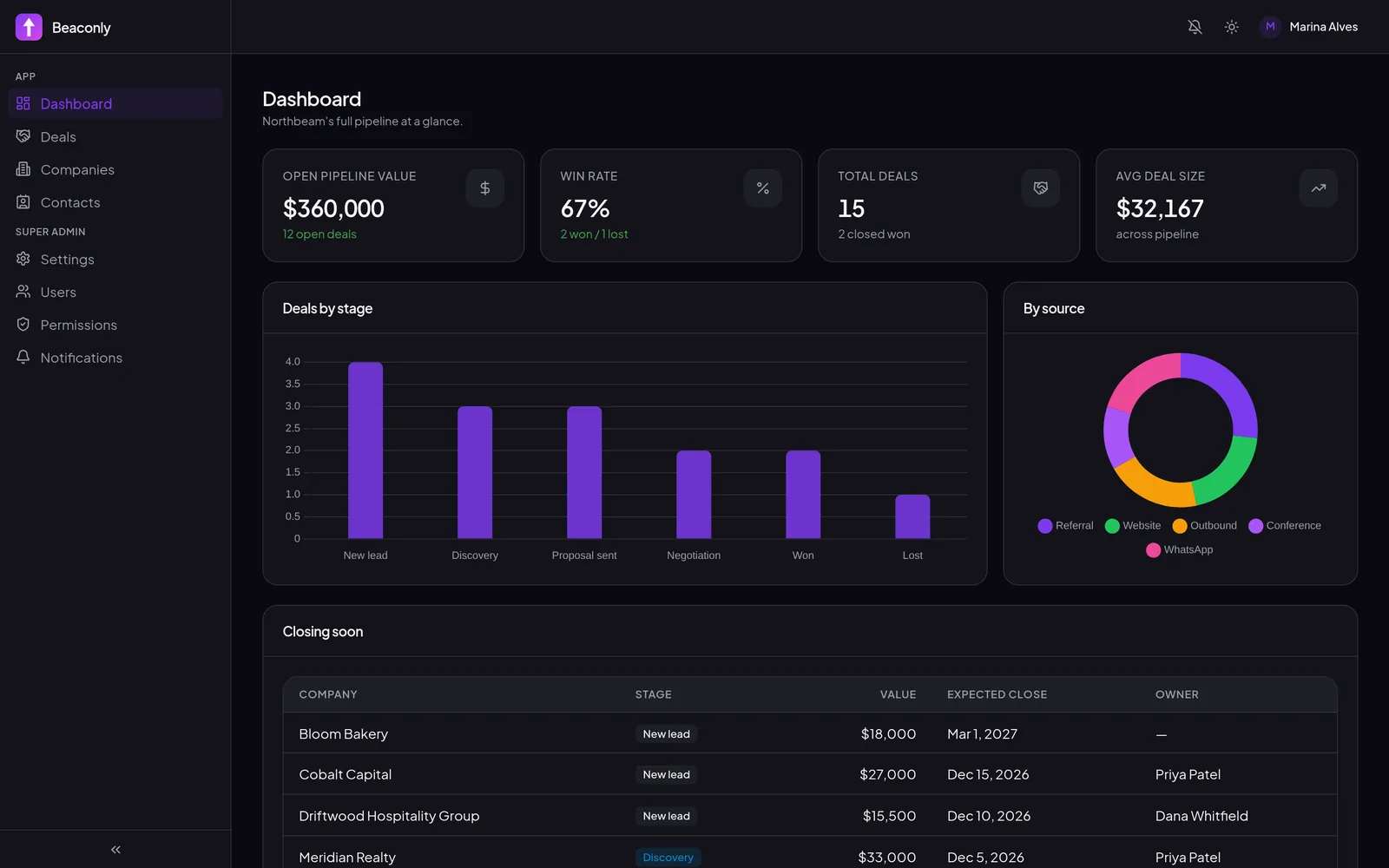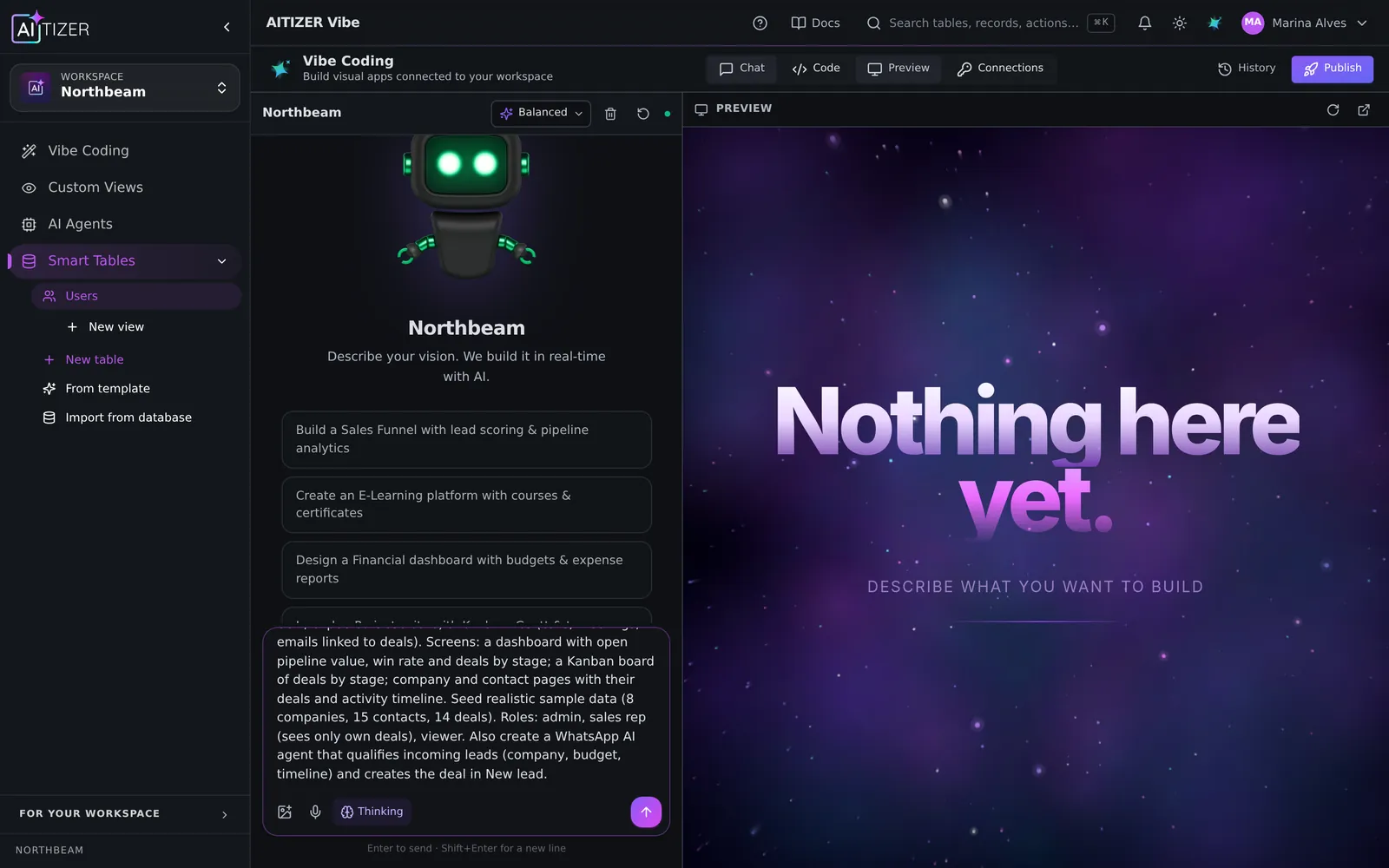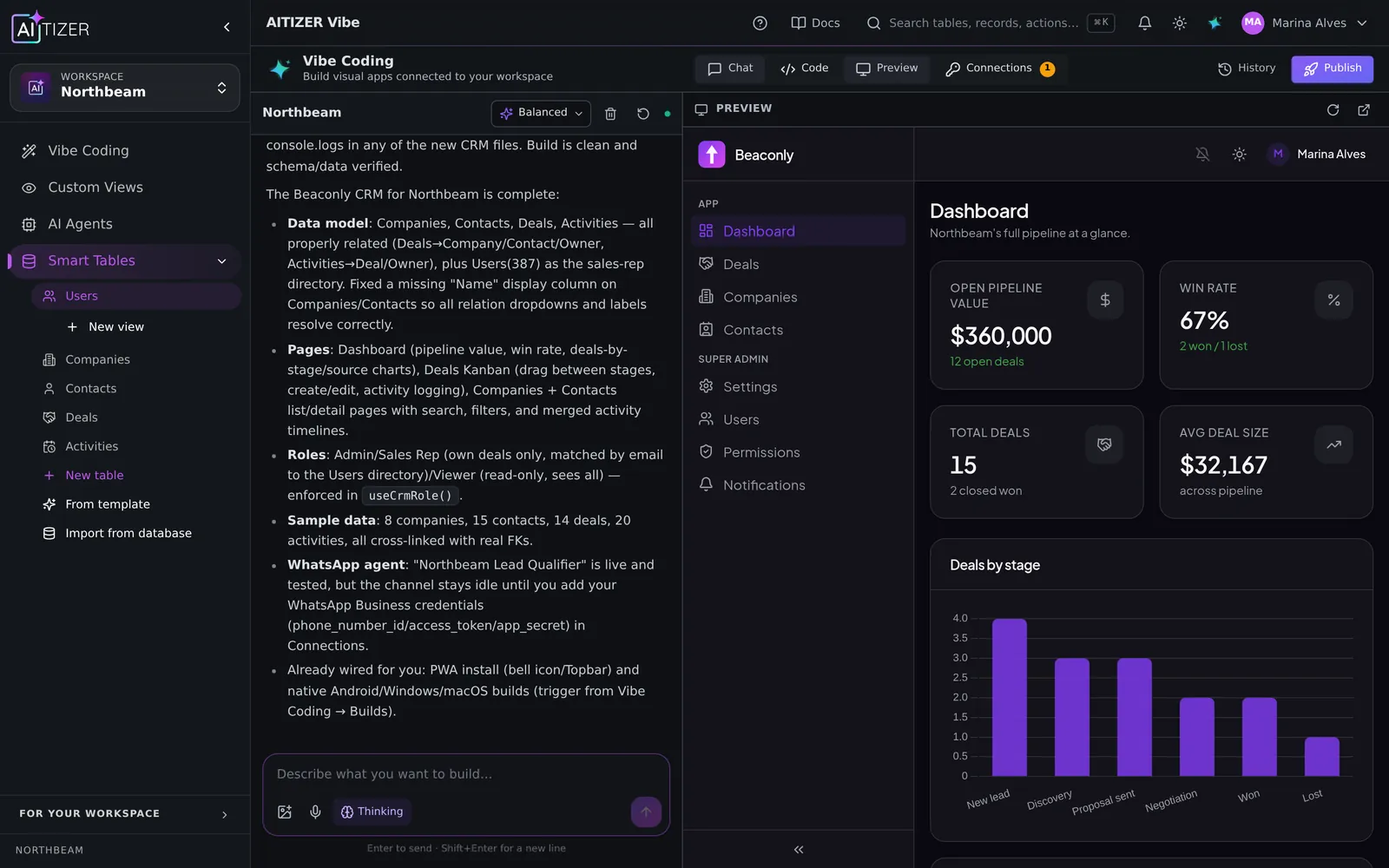
Every AI app builder demo looks the same: a prompt, a few seconds, a gorgeous screen. The differences show up on day two. When you need real data, real users, permissions, integrations and a place to run it.
This is a practical comparison, written by the team behind AITIZER, so read it with that in mind. We try to describe the other tools fairly; all of them are good at what they were designed for.
The short version
| Lovable | Bolt | AITIZER | |
|---|---|---|---|
| Best at | Polished front-ends fast | Full-stack code in the browser | Complete business systems |
| Database | Connects to Supabase | You wire it up | Built in (Postgres tables) |
| Permissions / roles | You implement them | You implement them | Built in, enforced on the server |
| AI agents (WhatsApp, chat) | Not the focus | Not the focus | Built in |
| Integrations | Via code | Via code | 240 ready connectors + any HTTP API |
| Hosting | Yes | Yes | Yes, plus your domain, PWA, Android, desktop |
| Who it is for | Founders, designers | Developers | Operators, agencies, teams |
Lovable: the fastest path to a good-looking front-end
Lovable is excellent at producing clean React interfaces and iterating on them in chat. For data it leans on Supabase, which is a solid choice. But it means you (or the AI) still design the schema, write row-level security policies and handle auth edge cases. If you are comfortable with that, it is a great tool.
Bolt: a full development environment driven by AI
Bolt runs a real development environment in your browser and lets the AI write and run the whole stack. It is powerful and flexible, and it rewards people who can read code, because you will own every decision about the backend.
AITIZER: the system first, then the screens
AITIZER starts from the opposite end. The workspace already has a database, users, roles, an API, an MCP server, integrations, automations and AI agents. When you describe an app, the builder creates tables and permissions with tools, then writes the screens on top.
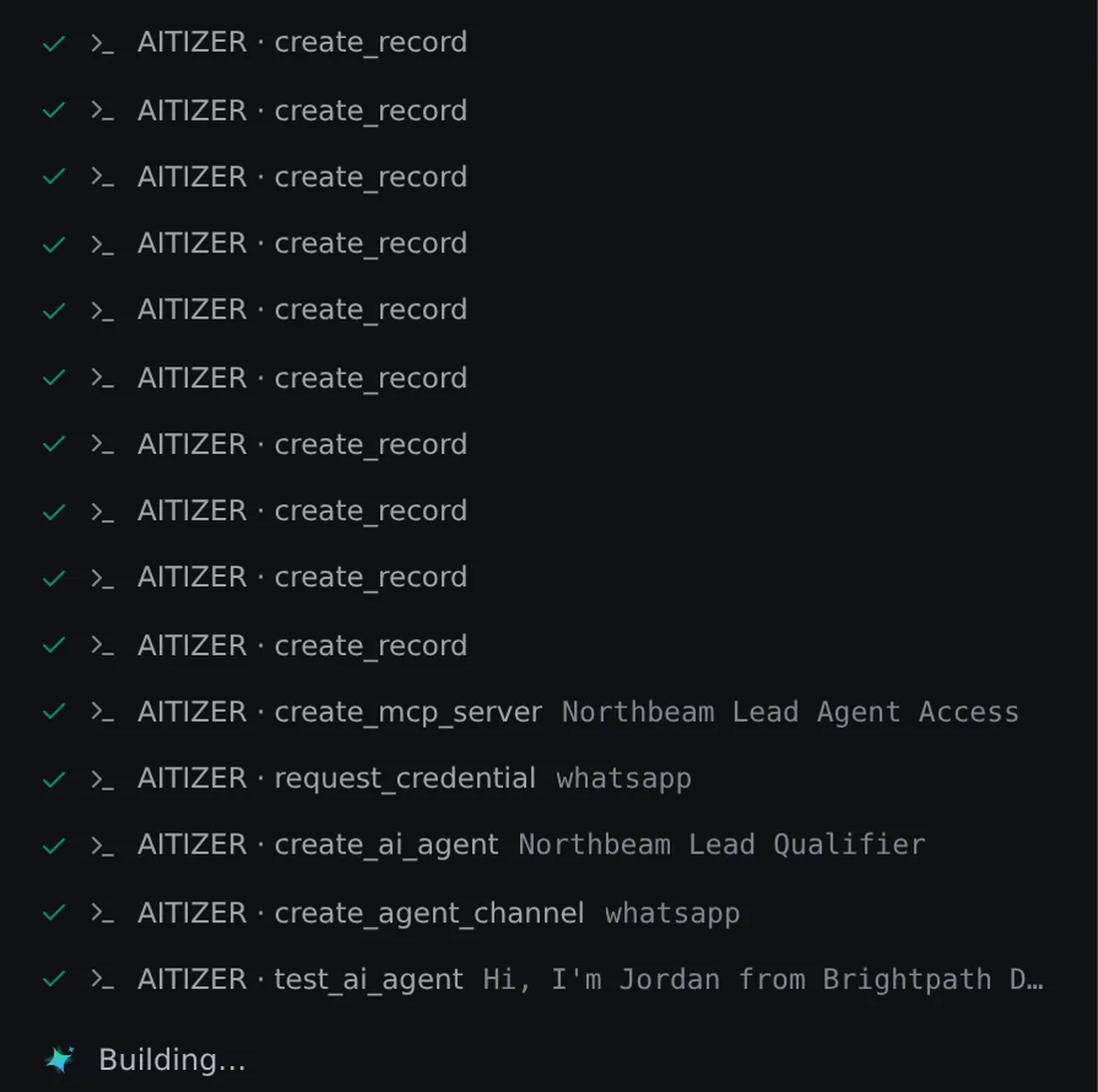
That has three practical consequences:
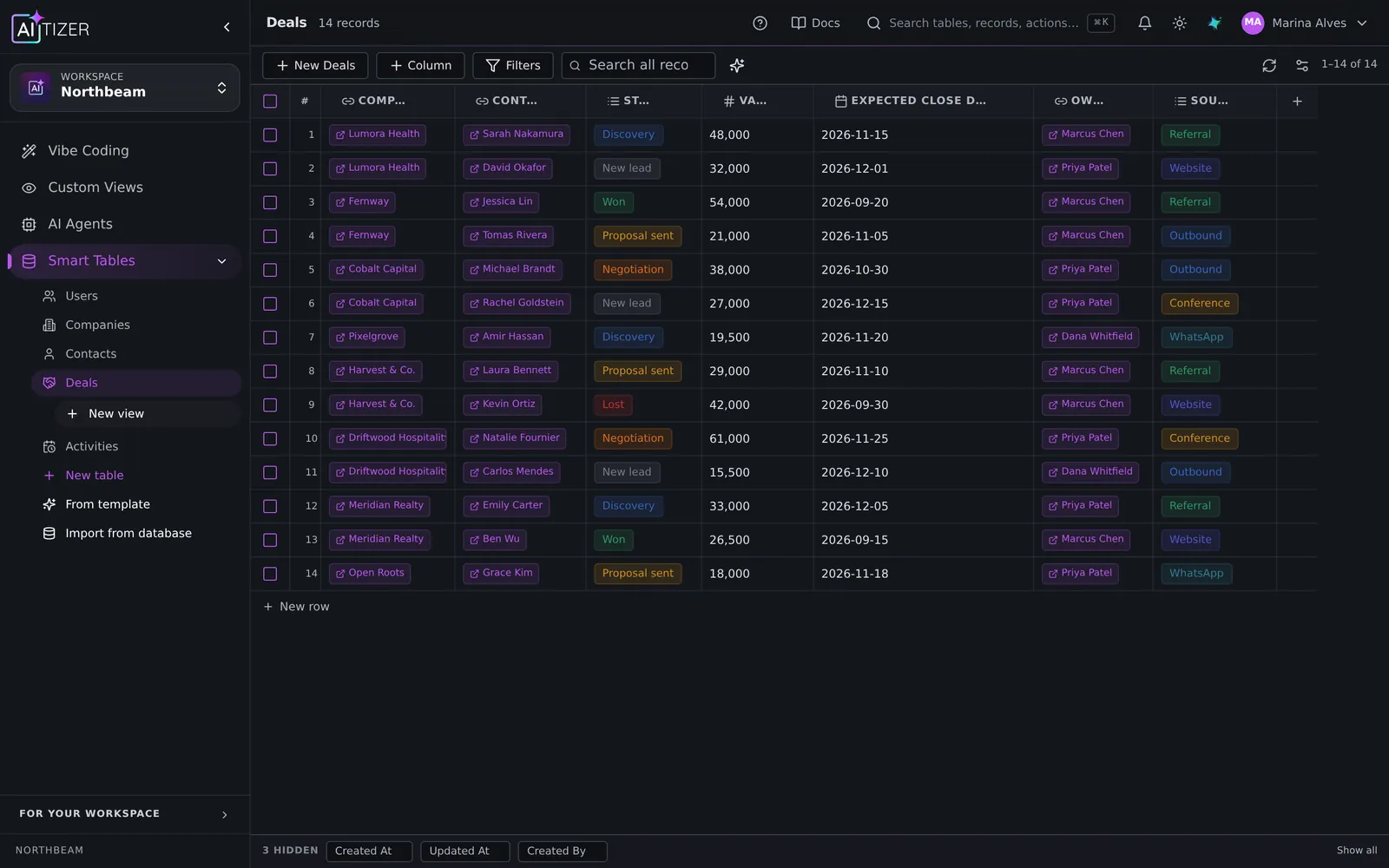
- Data survives the prototype. Your tables are real Postgres tables you can edit as a spreadsheet, import into, export, and query through REST or MCP.
- Permissions are not an afterthought. "Sales reps only see their own deals" becomes a server-side rule, not an
ifin the UI. - Agents come in the same box. A WhatsApp agent that reads and writes the same tables is a feature, not a separate product.
Which one should you pick?
- You want a marketing site or a front-end prototype by tonight → Lovable.
- You are a developer who wants AI to write a codebase you will maintain → Bolt.
- You need software that runs a business process. Customers, orders, approvals, stock, a CRM, a portal. With users and permissions and maybe an AI agent → AITIZER.
You can also combine them: AITIZER exposes every table through REST and MCP, so a front-end built elsewhere can use it as its backend.
Build it on AITIZER. Free, no card
Paste this into the composer and watch it ship:
Build an internal app for my operations team with requests, approvals and a dashboard. Admins approve, requesters only see their own requests.
- Real Postgres tables you own and can export
- AI agents on WhatsApp, Telegram and web chat
- Publish to your domain, or as a PWA, Android and desktop app